How many Kobido sessions should you plan? It depends on what you're hoping to achieve. For a fresh, rested face before an event, one session can be enough. For more progressive work on the facial contour, surface lines, tension and skin quality, I usually recommend a programme of 5 to 10 weekly sessions, followed by a maintenance session every four to six weeks. This isn't a sales pitch — it's the rhythm I see the face respond to best, in my studio in Paris and on my Milan dates. Here is how I guide my clients through that choice.
Contents
- Why this question deserves a real answer
- One Kobido session: what to expect
- A short 5-session programme: when it makes sense
- A 10-session programme: deeper, steadier work
- A note on what we know about repeated facial massage
- After the programme: the maintenance session
- Three goals, three rhythms
- What Kobido can — and cannot — do
- Why I don't recommend more than one session a week
- How I help you choose
Why this question deserves a real answer
"How many Kobido sessions does it take to see a result?" is probably the most frequent question I'm asked, often before any booking. And it's the one people would like me to answer in a single sentence.
I'd rather take the time to answer properly, because there is no universal number. The face isn't a fixed object: it's shaped by sleep, stress, hydration, hormonal shifts, posture, screens, facial expressions, and the way you breathe when you concentrate. The right number of sessions depends on three things: your actual goal (a one-off boost or a more visible, lasting change), the current state of your skin and facial tension, and the rhythm you can realistically keep. This guide gives you the practical landmarks I rely on in the studio when helping a client choose the format that genuinely fits — not the most expensive one.
One Kobido session: what to expect
A single Kobido session is not a wasted investment. It's a legitimate entry point, provided you arrive with the right expectations.
What you'll usually notice as soon as the treatment ends: a brighter complexion, visibly more rested skin, a face that feels "unclenched". Microcirculation has been stimulated throughout the massage; features look less drawn. Many clients tell me they feel as if they've had a proper night's sleep — even though they're stepping straight off the table.
What you shouldn't expect: a structural change to the facial contour, a visible smoothing of settled fine lines, or a transformation of skin quality. Those results take time and repetition. A single session works in the moment; a programme works through accumulation.
A single session is well suited to a specific moment — a wedding, a launch evening, an important photo — ideally three to five days beforehand. It also makes sense if you already come for maintenance and simply want to keep the face relaxed and luminous.
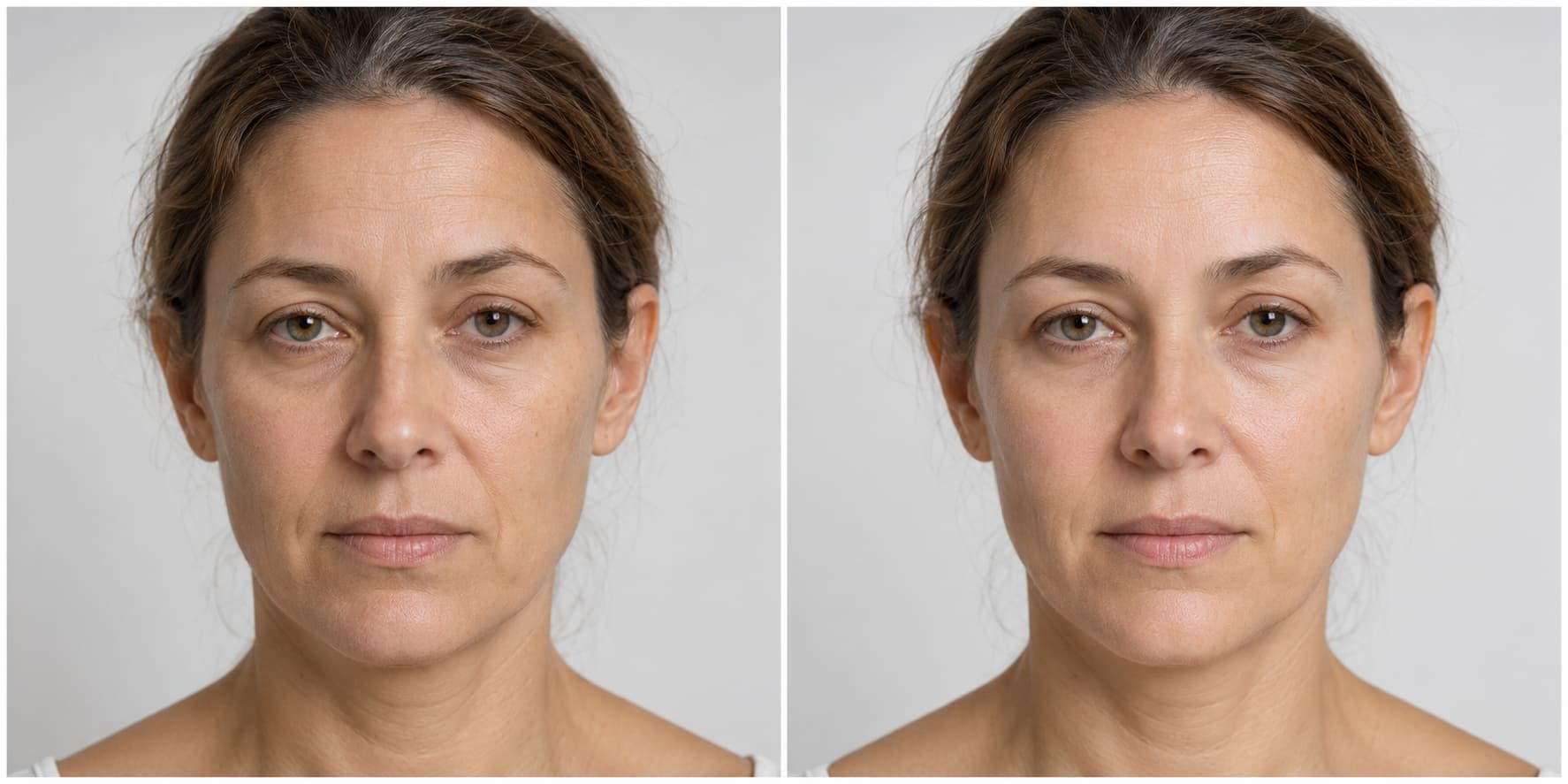
A short 5-session programme: when it makes sense
In my practice, the 5-session programme is the right starting point for most serious goals. At one session a week, it spans five weeks — a workable rhythm that fits a busy life without dominating it. If your schedule won't allow a strict weekly cadence, you can stretch it slightly (six to seven weeks in total), provided no more than ten to twelve days pass between sessions.
Why five, and not three? Because the first sessions are mainly about reintroducing movement. They release built-up tension, restore suppleness to the skin, encourage drainage, and wake up a face often dulled by stress and screens. The deeper work tends to be felt from the third session onwards, once the face has "accepted" the massage and the more profound manoeuvres can reach the layers that need them.
By the end of a 5-session course, my clients typically describe a cleaner facial contour, smoother skin to the touch, less marked surface lines (particularly at the corners of the eyes and across the forehead), and a more even complexion. Most of all, they describe a general sense of a lighter, less weighed-down face. The change isn't theatrical — it's the kind that makes people say "you look well" rather than "what have you done?"
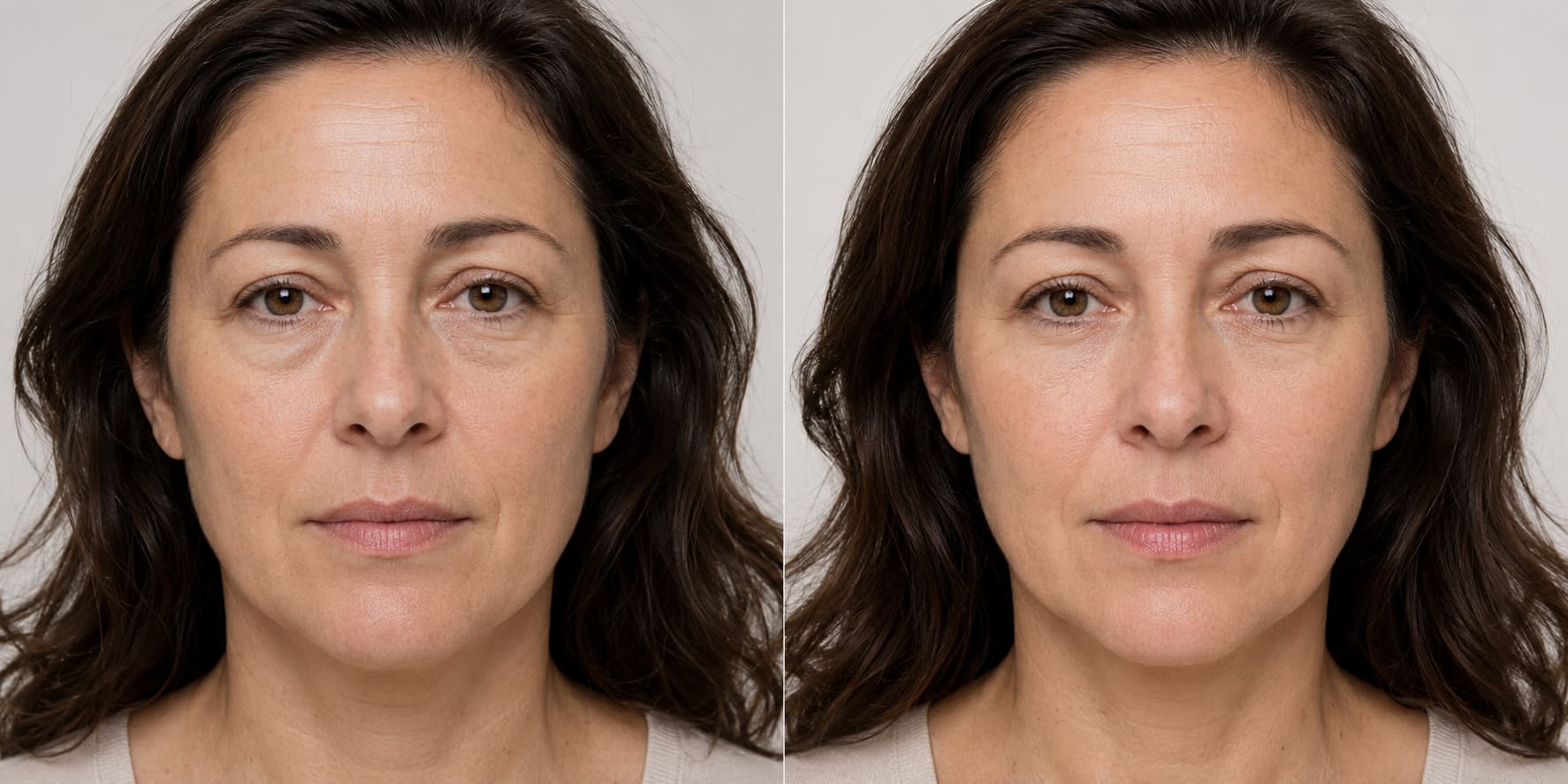
This format corresponds to my Kobido Journey in five sessions. You'll find current pricing on the treatments page. I usually recommend it for focused work after a draining stretch, a face "reset" at the start of autumn or spring, or a deeper introduction to Kobido for those who hesitate to commit to ten sessions.
A 10-session programme: deeper, steadier work
A 10-session programme isn't simply a 5-session programme doubled. It's a longer progression, closer to the logic of the traditional teaching I received from Master Shogo Mochizuki — the 26th Grand Master and official holder of the Kobido lineage — with whom I trained for 24 months.
Across ten weeks, the face moves through clear phases. The first three sessions handle release and recirculation. Sessions four to seven go deeper into the musculature — jawline, cheeks, eye contour, contour of the lower face. Sessions eight to ten consolidate the work, so the face isn't only stimulated but gradually learns to hold a softer, more open state. It's this final phase that allows the effects to be felt for longer in some clients, sometimes several months after the programme ends.
What I see change after ten sessions, concretely, in the studio: a more clearly defined facial contour, areas of lymphatic stagnation (under the eyes, along the jaw) noticeably decongested, skin denser to the touch and more responsive, expressions that stay mobile rather than fixed. Clients often tell me, after the final session, that they "recognise themselves again" in the mirror — without being able to pinpoint exactly what has shifted.
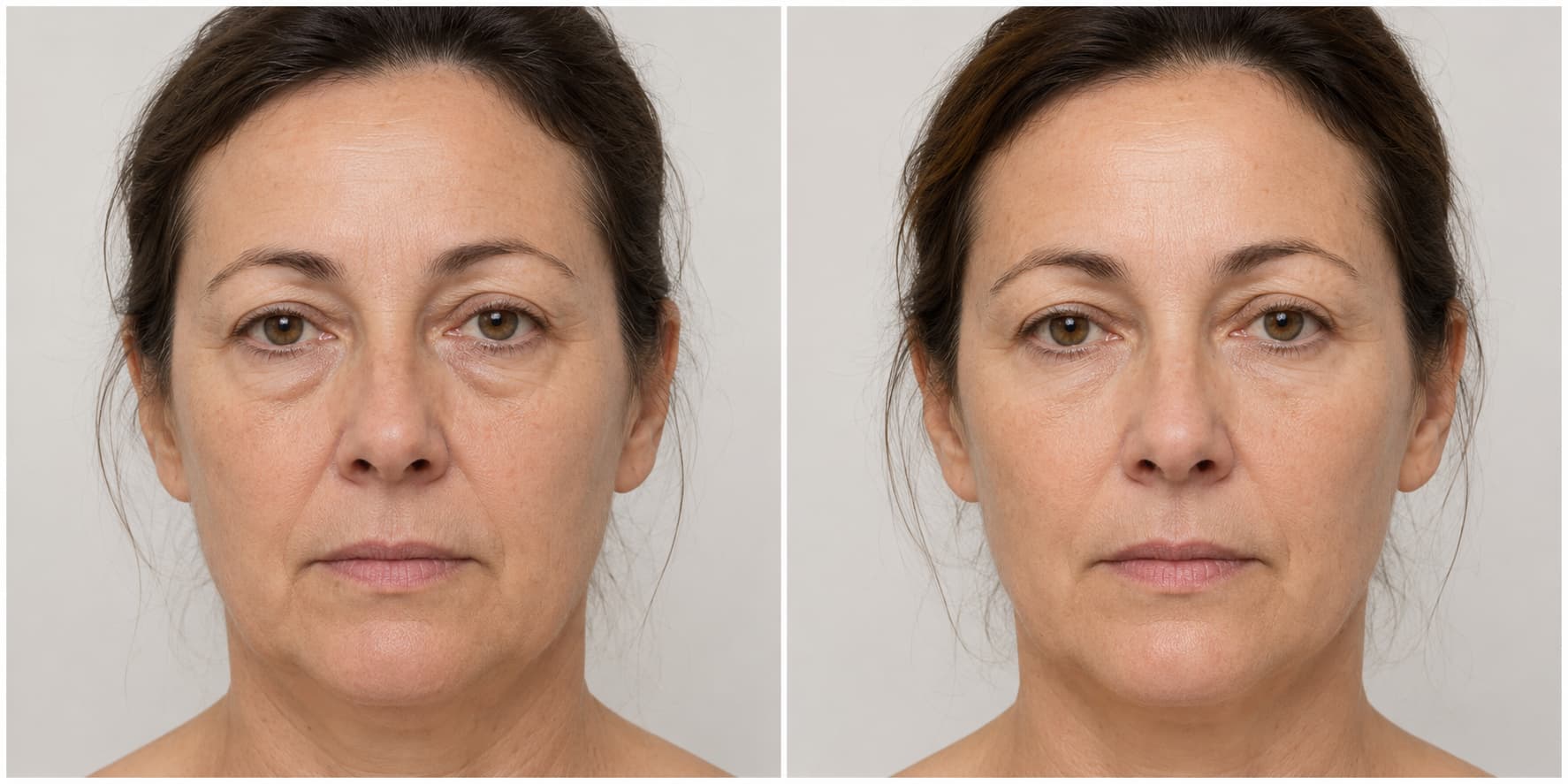
I tend to recommend a 10-session programme in three situations: approaching a meaningful life milestone where you want to arrive in the best visible form possible (a significant birthday, a wedding, a return to social life after a difficult period); after prolonged exhaustion that has marked the face; or as a first genuine commitment to facial care.
A note on what we know about repeated facial massage
I find it useful to give a measured word about what's known. The published evidence on manual facial work is still modest, but it consistently points in the same direction: sustained, repeated stimulation tends to produce more change than a one-off treatment. That's not a clinical promise — it's a coherent observation, and it matches what I see in practice.
If you're also considering aesthetic medicine alongside Kobido, the two approaches don't replace each other. They sit in different registers, and the choices around injectables or other procedures deserve careful, qualified advice. The NHS guidance on cosmetic procedures is a useful reference point if you want to think those decisions through calmly.
After the programme: the maintenance session
A programme only delivers its full value if it's followed by some form of maintenance. Without it, the face gradually returns to its prior equilibrium within two to four months — not a failure exactly, but a missed opportunity to keep most of the benefit. That isn't a flaw; it's simply how living tissue behaves.
My standard maintenance protocol: one session every four to six weeks, alternating Glow and Signature according to what you need at the time. After a 10-session programme, this monthly rhythm is usually enough to keep the result present. After a 5-session programme, I sometimes suggest closer maintenance for the first few months (every three weeks), before settling into a monthly rhythm.
Maintenance isn't fixed though. I have clients I've been seeing weekly for several years, who choose this as a regular point of pause and ongoing care for the face. That rhythm isn't strictly necessary on aesthetic grounds — it's a wellbeing choice. It isn't a "more intensive protocol" than the others either: it's their way of building Kobido into their lifestyle, much as someone might attend yoga or see an osteopath regularly. And over time, I can say their faces change particularly harmoniously — expressions stay mobile, skin quality holds, areas of tension don't get a chance to settle in. Other clients prefer a longer interval, every two months or with the change of seasons. It's all open to discussion, and the rhythm can shift from one life phase to another.
What I observe Many clients arrive with the idea of "catching up" on several years in a few sessions. I tend to say the same thing each time: Kobido doesn't turn the clock back; it supports the face as it returns to its own vitality. The distinction is subtle but essential, and it changes how you approach the programme in the first place. We aren't chasing another face. We're helping yours become more available, mobile and luminous.
Three goals, three rhythms
To help you place yourself, here are the three situations I encounter most often, and the rhythm I tend to recommend for each.
A one-off glow. You've got a specific event in the days or weeks ahead. A single session, scheduled three to five days before, is exactly the right answer. Choose Kobido Glow (40 minutes) if you're short on time, or Kobido Signature (60 minutes) for a deeper layer of relaxation through the integrated shiatsu work.
Visible work over a few months. You want something more noticeable and more lasting, without committing to an intensive arc. The 5-session Kobido Journey is your format — ideally weekly, then followed by maintenance every four to six weeks.
Sustained, gradual work. You're investing properly in skin quality, facial contour and built-up areas of tension. Ten weekly sessions, then monthly maintenance.
Hesitating between formats? That's entirely normal — and it's precisely what the pre-booking conversation is for. Rather than choosing on your own, let's talk it through: a few minutes by phone, message or email is usually enough for me to point you towards the format that matches your goal and your skin. Explore my treatments → | Book a session →
What Kobido can — and cannot — do
I'm careful with this distinction, because it shapes the quality of your engagement in a programme. Approaching a treatment with unrealistic expectations is the surest way to set up a disappointment that erases its actual benefits.
What Kobido can do: stimulate microcirculation, which lifts a dull complexion and decongests areas of stagnation. Support the tone of the facial expression muscles — those fine muscles involved in every movement of the face — often marked by time, stress and repeated tension. Improve suppleness in deeper layers, release entrenched tightness around the jaw, forehead and temples. Support skin quality over time through regular mechanical stimulation. It can also help you reconnect with your face without judging it.
What Kobido cannot do: act on deep, long-established wrinkles — manual work rarely smooths these out, it contextualises them within a face that is, as a whole, more relaxed. Replace aesthetic medicine: Kobido injects nothing, fills nothing, freezes nothing. Repair skin damaged by major external factors (heavy smoking, prolonged unprotected sun exposure, chronic sleep deprivation) without a parallel change in lifestyle. And, of course, treat a medical condition: Kobido is not a clinical treatment, and I make no diagnoses. When a question belongs to dermatology or medical aesthetics, I'll always say so.
Why I don't recommend more than one session a week
This rule comes from my training and from years of practice: deep manual work needs time to be integrated between sessions.
A Kobido session — particularly the Signature — engages the skin, the facial expression muscles, microcirculation, and the drainage pathways quite intensively. The face needs a few days to settle after that stimulation, drain what needs draining, and rest before the next round. One session a week is, in my experience, the right cadence during a programme: tighter doesn't add extra benefit and can be too much for certain skins; looser makes progression less steady.
How I help you choose
If you reach the end of this article still undecided, that's normal and even welcome. The choice happens with me, not alone in front of a screen.
When you get in touch, I take a few minutes to ask precise questions: your main goal, your past facial treatments, the quality of your sleep over recent months, any contraindications to check (recent injectables, facial surgery, pregnancy), and the time you can realistically give to a programme. That conversation lets me guide you towards the right format rather than the most expensive one.
It happens regularly that I steer a client who wanted to book ten sessions towards starting with five. Or that I suggest someone hesitating over a single session should go straight to a programme, because their goal isn't reachable otherwise. My job isn't to sell you a format. It's to help you invest your time and your budget in the right place.
I welcome you at my studio in Paris 17, with home treatments available in selected areas depending on availability, seven days a week from 8am to 8pm. I also receive clients on occasional dates in Milan.
Choosing your format together For a conversation before booking, you can reach me by phone, message or email. You can also book directly online if you already know what you want. Book a session → | See all treatments → | Read the FAQ →
Frequently asked questions about Kobido sessions
After the first session, you can usually expect a brighter complexion and a more rested face. For a more visible and longer-lasting effect on the facial contour, surface lines or skin quality, plan a programme of 5 to 10 weekly sessions. The deeper work often becomes clearer from the third session onwards.
During a programme, one session a week is usually the most balanced rhythm. Closer together is not necessarily more effective; further apart can make the progression less consistent. A 5-session programme therefore usually runs over five weeks, or six to seven if your diary requires it, while a 10-session programme runs over ten weeks.
Without maintenance, the face gradually returns towards its previous balance over two to four months. With a maintenance session every four to six weeks after the programme, the benefits tend to last longer. Maintenance is what turns a one-off programme into a steady facial wellbeing routine.
Yes, when the goal is specific: a fresh, rested look three to five days before an event, a first experience before committing to a programme, or a regular maintenance treatment every six to eight weeks. One session won't create a structural change in the facial contour or established lines; those results need repetition.
For a programme focused on deeper work, Kobido Signature (60 minutes) is usually the better choice, because the integrated shiatsu element allows for deeper relaxation and more complete muscular work. Kobido Glow (40 minutes) is well suited to a one-off boost, or as part of maintenance when your face needs lightness rather than depth.
Yes. Some clients choose a weekly session for several years, as a regular moment of relaxation and as long-term support for the face. It isn't compulsory, and it isn't a protocol everyone needs; it's a wellbeing rhythm, similar to keeping a weekly yoga practice.
Yes. I offer Kobido Signature at home in Paris, depending on location and availability. The treatment itself follows the same structure as in the studio, with a little extra time for setting up. The current details and prices are listed on the treatments page.
Other recent articles in the “The treatment ritual” category

Kobido at home in Paris: who it's for, why, how it works

Facial massage prices in Paris: a transparent comparison
