When you try to find out whether facial massage genuinely delivers something, you quickly run into two opposing narratives: on one side, wide-reaching promises (natural lifting, anti-ageing), on the other, a slightly hurried scepticism. The picture you get from the scientific literature is more nuanced — and, to my mind, more interesting. Some mechanisms are better explored than others — particularly local microcirculation and the calming response associated with touch — while other effects remain mostly observed in practice and must be framed with care. Here is what I think is worth sharing, as a Kobido practitioner trained over twenty-four months by Master Mochizuki, 26th Generation Grandmaster of the lineage.
Contents
- Why the scientific question deserves to be asked — and asked well
- What research actually studies (and why Kobido rarely appears in it)
- Cutaneous microcirculation: a measurable, documented effect
- Lymphatic drainage of the face: what's observed, what remains debated
- Tone of the facial expression muscles: what we know about manual work on the facial expression muscles
- Touch, stress and the nervous system: the best-documented domain
- Effects on the skin itself: elasticity, hydration, "radiance"
- What science doesn't (yet) allow us to affirm
- In short
- Frequently asked questions about facial massage benefits
Why the scientific question deserves to be asked — and asked well
The question "does it work, scientifically?" is often framed too broadly to receive an honest answer. Before turning to the studies, it helps to be precise about what "benefit" means. An immediate effect on the look of the complexion? A lasting structural change in the face? A measurable shift in a biological marker? A perceived improvement in wellbeing? These four questions don't call for the same evidence, nor for the same methodologies.
Another point matters just as much. A facial massage isn't an isolated molecule that you could test at a fixed dose against placebo: it's a manual practice dependent on technique, rhythm, pressure, duration, the state of the skin and the person receiving the treatment. When research uses the term facial massage, it often refers to fairly disparate protocols: self-massage with a roller, a few minutes of manual intervention in a laboratory, a standardised treatment in a salon. Kobido itself is a complete, codified practice that combines several types of technique (smoothing strokes, pressures, percussions, drainage, deep muscular work) over long sessions — in my own studio I offer 40- or 60-minute formats, and other practitioners may go further. The conclusions of a five-minute roller study don't transfer directly to a Kobido session — and conversely, the absence of a study specifically on Kobido does not mean its effects are illusory. It simply means that the practice, like many hands-on traditions with long histories, has not yet been the subject of controlled clinical trials meeting the current standards of biomedical research.
What research actually studies (and why Kobido rarely appears in it)
If you search the major medical databases for facial massage, you'll find several hundred articles, but their distribution is very uneven. The most numerous studies cluster around three axes: facial rehabilitation after paralysis or surgery, short-term vascular effects of cutaneous massage, and the psychophysiological effect of touch (cortisol, heart rate, subjective experience). By contrast, good-quality clinical studies specifically devoted to manual aesthetic practices — Kobido, anma, traditional Japanese facial work — are rare, older, or methodologically limited (small samples, no control group, short intervention windows).
There are several reasons for this. Long manual practices don't lend themselves easily to standardised protocols: each practitioner adapts her technique to the skin she is working on, which makes reproducibility hard to measure. Cosmetic research funding tends to focus on topical active ingredients and medical devices, not on hands-on techniques. And the tools for evaluating "radiance" or "a less tense face" are still being developed in aesthetic dermatology.
In practice, this forces us to draw on neighbouring studies — mechanical facial massage, general lymphatic drainage, therapeutic touch — and to reason by analogy, flagging each time where the analogy holds and where it doesn't.
Cutaneous microcirculation: a measurable, documented effect
This is one of the effects for which we have relatively concrete experimental data. A Japanese team — Miyaji, Sugimori and Hayashi — showed, in a study published in 2018 in Complementary Therapies in Medicine, that a five-minute mechanical facial massage significantly increases cutaneous blood flow for at least ten minutes after the massage ends, and that regular use over five weeks improves vascular reactivity to local thermal stimulation (study available on PubMed). The effect is documented on the specific area massaged, not the whole face — which is consistent with the idea that local vascularisation responds to mechanical stimulation.
This protocol cannot be transferred directly to Kobido, which works the entire face surface over long sessions (the formats I offer in my own studio last 40 to 60 minutes, and others offer more) and combines several different types of movement, very different from rolling friction. The study does, however, offer a coherent thread for understanding why prolonged manual work on the face is, in practice, associated with a more vivid-looking complexion — more even, with dull areas regaining some luminosity — which I see myself in the studio. This circulatory dimension is also what explains the "glow" effect I describe in detail in my article on Kobido effects, area by area.
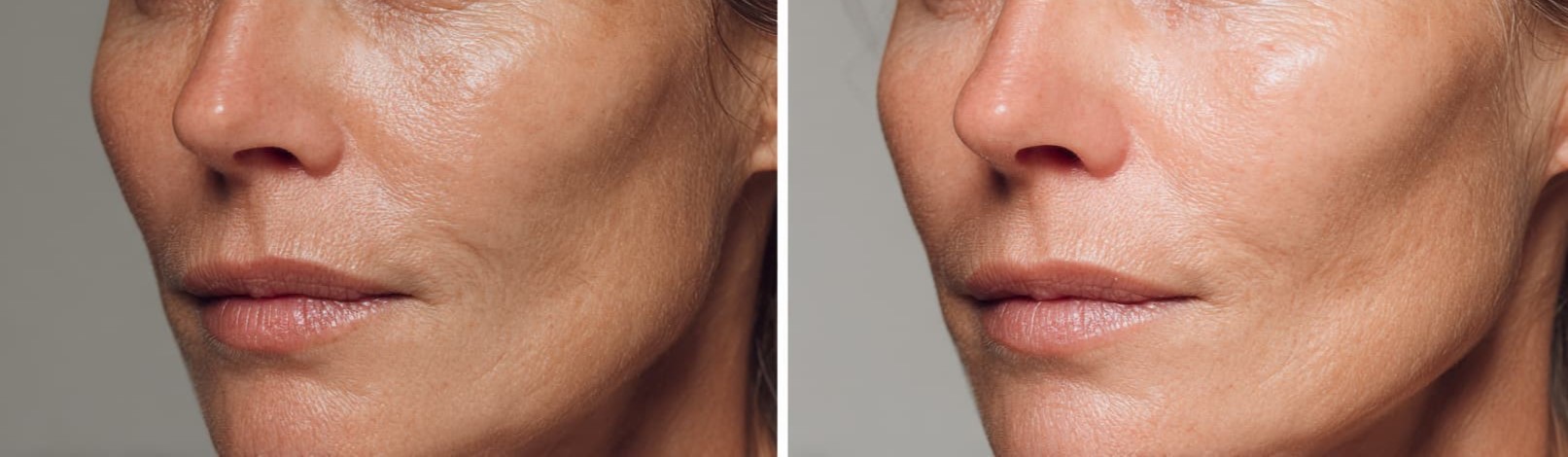
An important caveat: microcirculation is a real but short-lived effect. Without repetition it fades within days. That is precisely why I recommend courses rather than isolated sessions — I explain the reasoning in how many Kobido sessions to plan, depending on your goals.
Lymphatic drainage of the face: what's observed, what remains debated
Manual lymphatic drainage, in its general bodily form, has been used in medical settings for several decades, particularly in post-surgical rehabilitation and in the management of lymphoedema. In these precise medical contexts, it is the subject of more structured literature than aesthetic facial massage. The lymphatic system is also receiving renewed attention, including in neuroscience — the NHS, among other public health bodies, describes the role of the lymphatic system in fluid balance and immune response (see the NHS overview on lymphoedema).
On the face specifically, the situation is more contrasted. The anatomy of facial drainage is well described (the lymphatic vessels converge towards the submandibular, pre-tragal and occipital nodes), but clinical studies measuring the effect of facial massage on lymphatic congestion or mild oedema are less numerous. What you observe in practice is a visual improvement on certain areas of mild stagnation: puffiness under the eyes after a short night, a "fuller" face after a long flight, a heavier feeling in the lower face at the end of the cycle.
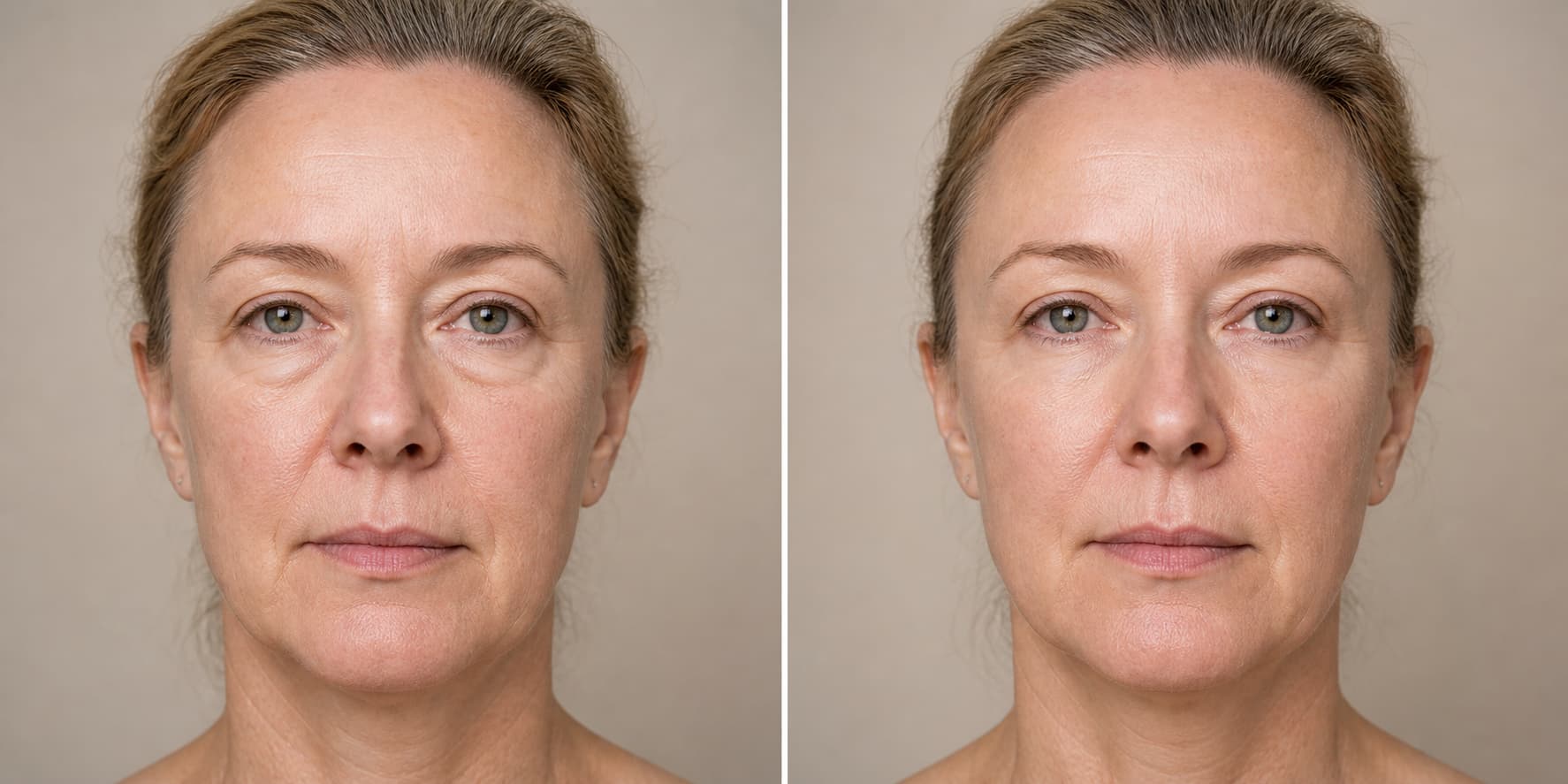
That said, speaking of a "great cleansing" of the face or of "evacuating toxins" would be an abusive extension. Manual drainage acts on local fluid dynamics; it has no role in modifying the biochemical composition of the face. That's a distinction I prefer to make plainly.
Tone of the facial expression muscles: what we know about manual work on the facial expression muscles
The facial expression muscles — that family of small muscles which insert directly into the skin of the face and carry all of our expressions — occupy a singular place within the human musculature. Unlike classical skeletal muscles, they don't move a joint: they move the skin itself. That is what makes manual work on the face both relevant and delicate.
The most robust scientific data on hands-on work with the facial expression muscles comes from facial rehabilitation, particularly in patients recovering from Bell's palsy or post-surgical sequelae. In those precise medical contexts, certain approaches to mobilisation and exercises can support functional recovery. That does not allow us to conclude directly to a comparable effect on a healthy face; these studies do show, at least, that the facial expression muscles can be mobilised by manual work — for Kobido, this remains a useful hypothesis, not a direct proof.
An important nuance to head off a common misunderstanding: facial massage doesn't "build" the muscles of the face the way a strength-training session would. It works through mobilisation, release, mechanical stimulation and greater awareness of facial tension and movement. On a tense jaw, a contracted forehead or under-mobile cheekbones, regular manual work can restore some suppleness and ease certain contractures — it's neither a muscle-building effect, nor a medical rehabilitation effect.
In Kobido practice, work on these muscles is continuous: precise kneading of the masseter, smoothing strokes lifting from the jaw towards the cheekbones, precise pressures on the attachment areas of the smiling muscles. What I see over time — and what my clients describe — is a less tense jaw, a jawline that appears better supported, expressions that remain mobile. This is central to my approach to working on the jawline, which I detail in jawline: understanding the muscular work of Kobido.
What I observe When a client tells me about a face that feels "heavy" or "marked", what she's describing is almost never a question of biological age. It's an accumulation: tension in the masseter linked to night-time bruxism, frontalis contracture after days of screens, stagnation under the eyes after several short nights. The studies I have just cited help me put words to what my hands sense: these areas aren't fixed. They respond to manual work, because they are alive — irrigated, innervated, capable of recovering mobility. It is that plasticity, more than any promise of an "anti-ageing" effect, that makes the practice worthwhile.
Touch, stress and the nervous system: the best-documented domain
Paradoxically, the effect on which data converge most clearly on the massage side — and the one we talk about least when presenting Kobido — has to do with stress. Several studies on massage and touch suggest a modulation of stress-related markers such as cortisol or parasympathetic activity, measured through heart rate variability. These data don't always focus on the face, but they illuminate the deep calming feeling so often described after a session.
These mechanisms aren't specific to the face, but they apply naturally to it. A skin rich in sensory receptors, a slow and steady touch over a long session, a quiet environment: these conditions can favour a calming response, often associated with parasympathetic activation. Many of my clients describe, once a session ends, a feeling of "settling" that is quite different from simple muscular release.
Research on stress shows more broadly that sensory information participates in the regulation of our state of alert. Slow, predictable and considerate touch can fit within that framework, without this making facial massage a medical treatment for stress. For many clients who come back regularly, it is probably one of the most profound benefits — the one that brings them back.
Effects on the skin itself: elasticity, hydration, "radiance"
The question of direct effects of massage on the skin — its elasticity, its hydration, its texture — is more open. Some exploratory work on facial massage devices (rollers, gua sha) suggests modest effects on certain skin parameters measured after several weeks of regular use. These protocols remain distant from Kobido and don't allow firm conclusions, but they shed light on a plausible principle: regular mechanical stimulation can have a measurable influence on certain parameters of skin quality, depending on the protocols studied.
The "radiance" of the complexion is harder to objectify. It is a perception that combines several parameters: chromatic uniformity, finer grain, the way light reflects off well-hydrated skin. All of these parameters benefit from an active microcirculation and a supple skin. It is probably through that indirect route — circulation, drainage, fascial release — that Kobido contributes to what clients describe as a "more luminous" face.
What I think it worth underlining, and what I always say during the preliminary conversation: massage is not a substitute for good skin hygiene. Hydration, sleep, sun protection and balanced nutrition remain the fundamentals. Kobido comes to support that balance, not to replace it.
And a medical caveat that matters to me: facial massage is not suited to every skin at every moment. Certain skin situations — active inflammatory acne, rosacea in flare-up, the aftermath of a dermatological procedure — call for postponing or adapting the session. I have detailed those precautions and the right approach in my article on what dermatologists think about facial massage.
What science doesn't (yet) allow us to affirm
Then there is what it would be imprudent — even dishonest — to promise.
Facial massage does not act, on present evidence, on deep lines already established in the dermis. It does not modify bony structure. It does not replace an aesthetic medicine procedure for someone seeking a targeted, marked effect on a specific fold or volume — a point I am clear about from the very first conversation, and which I develop in my article on Kobido and aesthetic medicine: two approaches to the face, not to be confused.
Nor is there, to my knowledge, a good-quality clinical study demonstrating that Kobido has an "anti-ageing" effect measurable in the strict dermatological sense (objectively reducing wrinkles, modifying collagen structure). There are observations, case series, converging clinical perceptions — which is not nothing — but not the level of evidence that would allow such an affirmation. I would rather say so than hide behind vague formulations.
My earlier work in medical imaging taught me, above all, to distinguish what is observed from what can actually be demonstrated — I write about that passage from imaging to Kobido in a separate piece. Honestly presenting what science supports, and what it does not, is part of the practice.
To find out concretely whether facial massage suits your situation and what results to expect, I have devoted a more practical article to that question.
Discussing your expectations before a session To adjust what the practice can really bring to your face, the most useful thing is often a short conversation before the first appointment. A message or a quick call is enough for me to guide you towards the format that fits your goal. See my treatments → | Book a session →
In short
Facial massage offers real benefits, documented to varying degrees by science: stimulation of cutaneous microcirculation, support for local lymphatic drainage, an effect on the tone of the facial expression muscles, a robust parasympathetic response to touch (cortisol, oxytocin), and indirect effects on skin quality. Kobido itself, as a complete practice, has not yet been the subject of specific good-quality clinical studies, but it is consistent with these documented mechanisms. What lies beyond the reach of manual work — deep established lines, bone volumes, lasting structural transformation — belongs to other approaches, which it is worth knowing in order to guide each client towards the right choice.
Frequently asked questions about facial massage benefits
Not to my knowledge, and not at the level of evidence required by modern clinical research (randomised controlled trials). On the other hand, several studies look at neighbouring practices — mechanical facial massage, lymphatic drainage, therapeutic touch — whose conclusions can illuminate certain mechanisms mobilised in Kobido, without constituting direct proof of the practice itself. The absence of a specific study doesn't mean the effects are illusory: it means the practice hasn't yet been evaluated by the current standards of biomedical research.
This is one of the best-documented effects. A 2018 Japanese study showed that a mechanical facial massage significantly increases cutaneous blood flow for at least ten minutes after the massage, and that regular use improves vascular reactivity. This circulatory stimulation is consistent with the "glow" effect observed from the very first Kobido session — a more even complexion, dull areas regaining luminosity.
The facial expression muscles — fine, inserted into the skin — respond to manual stimulation, as shown by work in facial rehabilitation after paralysis or surgery. On a healthy face, regular work supports the tone of these muscles and releases areas of contracture (jaw, forehead, around the mouth). It isn't a muscle-building effect in the classical sense; it is a support for the mobility and coordination of the facial expression muscles.
Because it is the best-supported effect of massage in general. Several studies have measured a drop in salivary cortisol, an activation of the parasympathetic nervous system (heart rate variability) and an elevation in oxytocin after a session. The skin of the face is richly innervated, and slow, predictable, considerate work strongly activates these mechanisms. Many clients describe, once a session wraps up, a "settling" that goes beyond simple muscular release.
Not in the strict sense of the term. To date, there is no good-quality clinical study demonstrating that facial massage objectively reduces established lines or modifies the collagen structure in a measurable way. What science does support, on the other hand, is a bundle of indirect effects (microcirculation, elasticity, settling of the nervous system) that contribute to a more rested and more luminous face. That is valuable, but not "anti-ageing" in the strict dermatological sense.
Several reasons. Long manual practices are difficult to standardise: each practitioner adapts her technique to the skin she is working on. Cosmetic research funding tends to focus on topical active ingredients and medical devices, not on hands-on techniques. And the tools for evaluating "radiance" or "a less tense face" are still being developed in aesthetic dermatology. This absence of dedicated studies isn't a negative verdict — it is a snapshot of the state of research.
Other recent articles in the “Facial wellbeing” category

Kobido and sensitive skin: rosacea, reactivity, what to know

Cortisol face: how stress ages your skin — and what helps
