Kobido — a Japanese facial massage — works on the whole face, but it doesn't "target" one area the way a clinical procedure would aim at a specific feature. Through manual stimulation of microcirculation, work on the facial expression muscles, and the release of areas of tension, it supports a more even radiance, a more defined facial contour, less fixed expressions, and an overall sense of a more relaxed face. Some areas respond more quickly in my hands — forehead, eye contour, jawline — while others take time and regularity to soften (nasolabial folds, a long-established oval). Here is a frank walk through what you can reasonably expect from Kobido massage, zone by zone — and where it cannot honestly promise change.
Contents
- Why talk about effects "zone by zone"
- A preliminary note: the face isn't a grid
- The forehead and the area between the brows
- The eye contour: crow's feet, dark circles, tired eyes
- The cheekbones and malar area
- The nasolabial folds
- The jawline and the facial contour
- Around the mouth and the "smoker's lines"
- What about the neck and décolleté?
- Whole-face effects: radiance, release, a lighter face
- What Kobido cannot do, zone by zone
Why talk about effects "zone by zone"
When you look up Kobido online, you quickly meet wide promises: "natural lift", "rejuvenating effect", "recovered radiance". These phrases aren't false, but they don't tell you what actually happens, area after area.
This article answers a concrete question I hear often: "I mostly have an issue with this particular area — is there anything Kobido can do for it?" What I'm offering here is a walk across the face with what I see in the studio: what Kobido can reasonably support, what takes time, and what will stay out of its reach.
A preliminary note: the face isn't a grid
Before going into the detail, I want to make something clear that shapes all of my work. The face isn't a mosaic of isolated problems: a clenched jaw pulls the oval downwards, a tight forehead weighs on the eyes, marked nasolabial folds are often linked to the position of the cheekbones. Working one area without considering the others rarely produces a good result. A Kobido session is therefore always whole-face: even if you came "for the oval", I begin by reading the entire face, and I work the connected areas.
That said, some areas do respond more visibly and more quickly than others. The following paragraphs unpack that nuance.
The forehead and the area between the brows
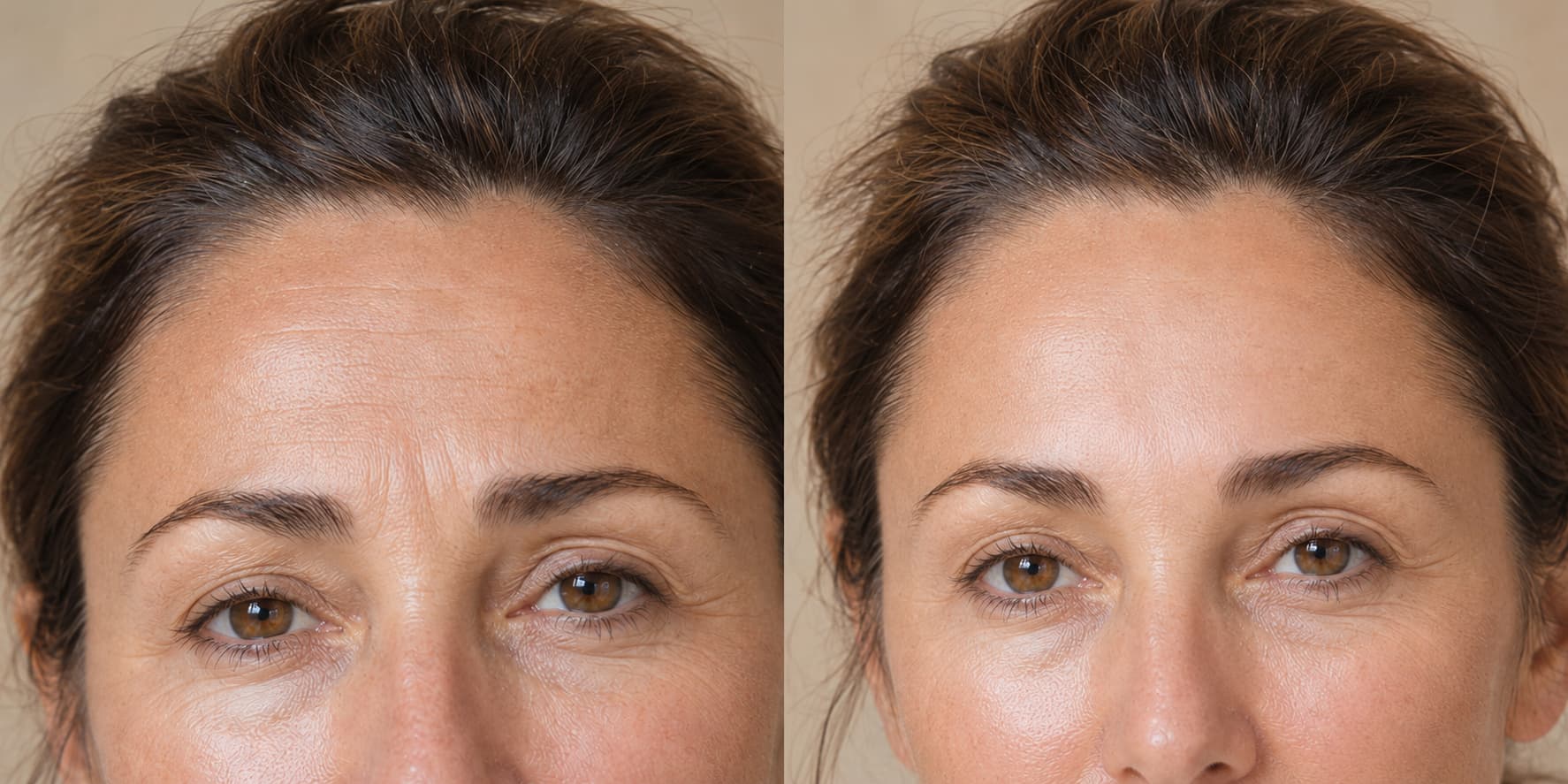
This is often where some clients perceive the effect most quickly — because it's also one of the most tension-loaded areas in active people who spend long hours at screens and live with chronic stress.
What Kobido can support here: a visible release of the area, brows that look less "pulled", a frown line that creases less in expression, a sense of the forehead feeling "less held". Many clients tell me, at the end of a session, that they've "released something" they didn't know they were holding.
In practical terms, I work with deep smoothing strokes that relax the frontalis muscle, pressures along the brow line and the hairline, and more specific kneading work between the brows. On set expression lines, Kobido doesn't erase — it softens the contracted quality and restores mobility.
The eye contour: crow's feet, dark circles, tired eyes
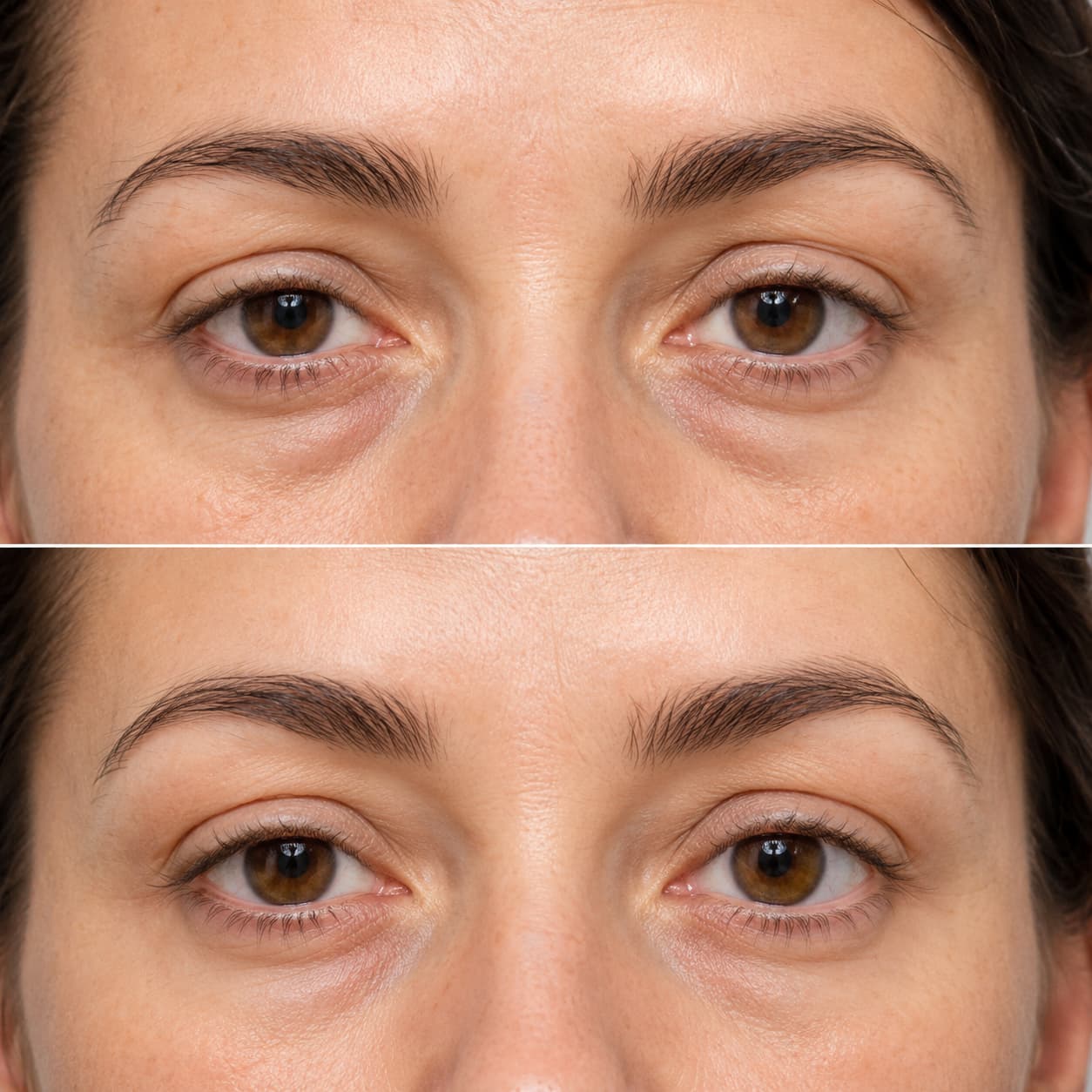
The eye contour is an area where I get a lot of questions, and where I have to be particularly careful — because it's also the area clients themselves watch most in the mirror.
What Kobido can help with: a more rested, more open gaze, dark circles that look less marked when they come from lymphatic stagnation (puffiness, bluish shadows in the morning) rather than from a structural hollow. Crow's feet may appear less marked at rest — not because the skin has been smoothed away, but because the muscles around the eye have softened.
What it cannot do: fill a hollow under the eye (which would be the field of hyaluronic acid), or lastingly erase crow's feet that are now etched into the skin. On pigmented dark circles (genetic or hyperpigmentation-driven), it will have little effect; on circulatory ones, manual drainage can make a visible difference from the first session. For general anatomical context on how delicate this area is, the NCBI overview of facial muscles is a useful reference.
The cheekbones and malar area
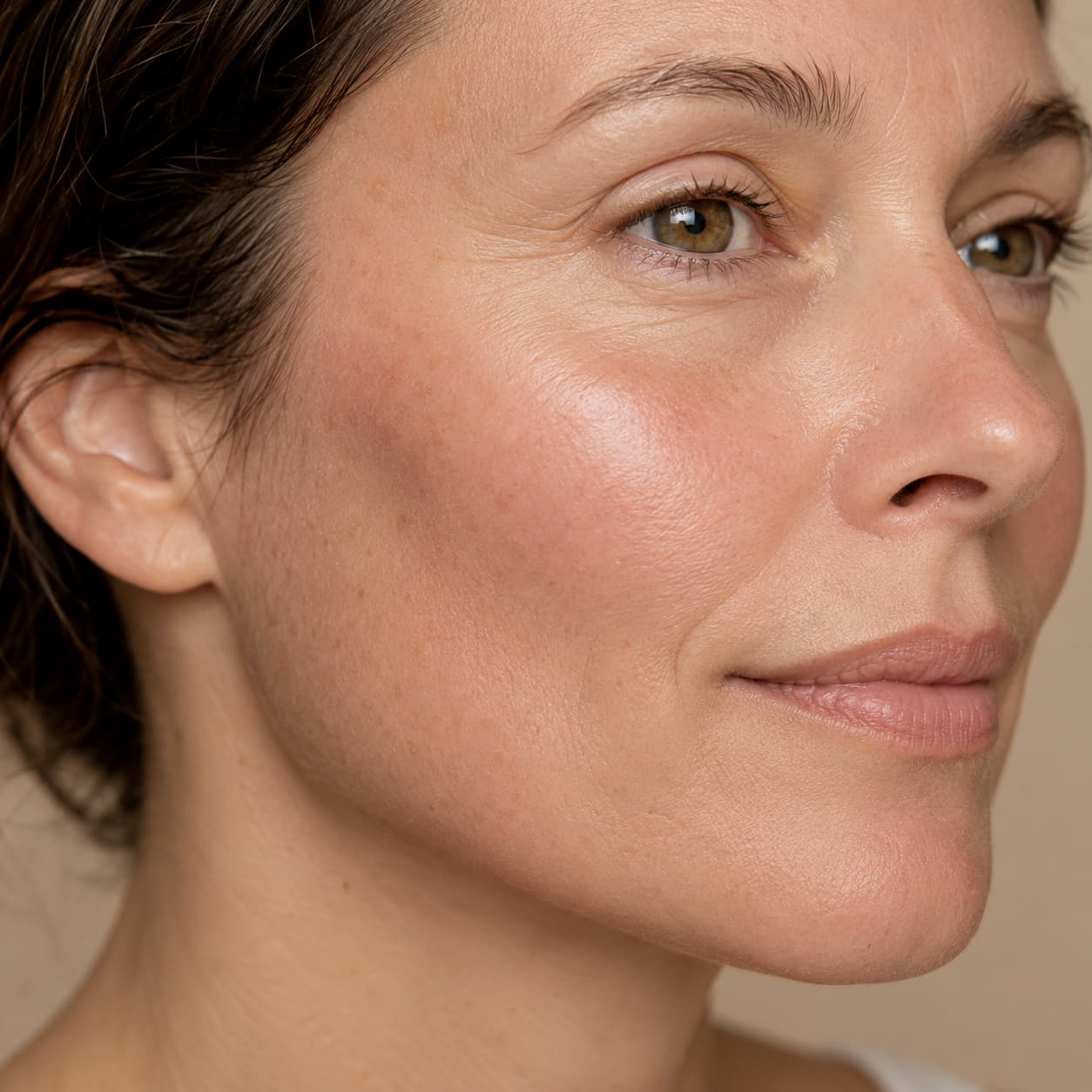
The cheekbones are a central focus in Kobido, because they give the face its structure and its light. When this area loses tone, the whole face seems to "drop" visually.
What Kobido can help with: a more present malar tone, cheekbones that look better carried, a more harmonious transition between the cheekbone and the under-eye area. Over time, some clients notice that the area takes on a "more drawn" shape — it isn't added volume, it's tone returning.
The concrete work happens through upward smoothing from the jaw, precise kneading along the zygomatic muscle, and pressures on the acupressure points that structure the area. This is also where I work microcirculation most, because it shapes the light of the complexion right here.
The nasolabial folds
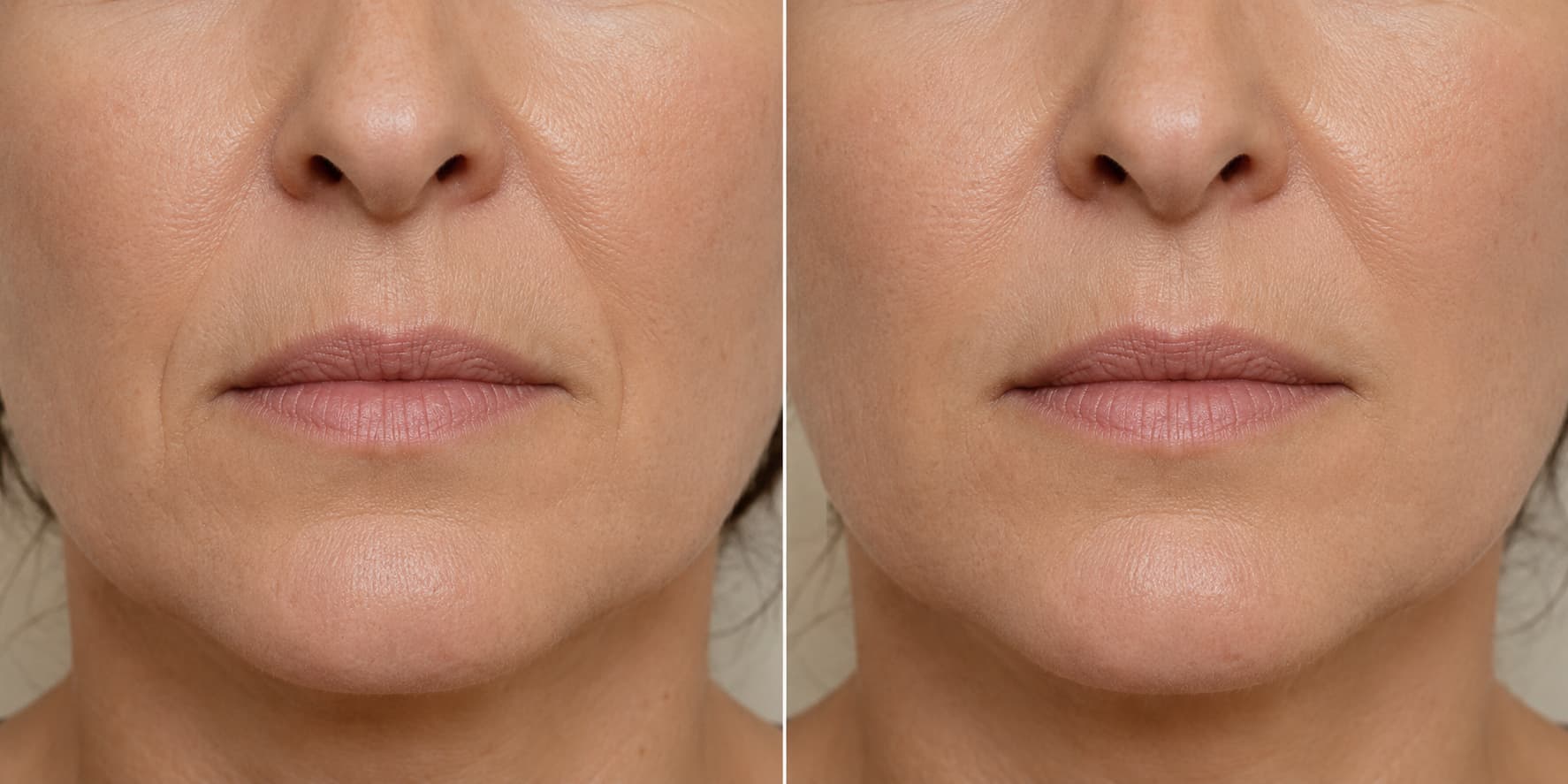
The nasolabial folds — those two lines that descend from the corners of the nose towards the corners of the mouth — are one of the topics where I have to be most honest. This is an area where Kobido has some of its most modest effects, and I prefer to say so plainly.
Why? Because the folds are largely tied to bone structure, the position of the cheekbones, and decades of repeated facial expression. They aren't an area of tension you can release the way you release a contracted forehead.
What Kobido can still bring: work on the cheekbones and jaw that, indirectly, softens the visual weight of the folds (a more toned upper face lightens the lower face). On the folds themselves, the work is gentle — smoothing strokes, local drainage, surrounding pressures. The results are subtle, and this is typically a subject where aesthetic medicine offers more direct solutions. I always raise that point in the pre-booking conversation if it matters to the client.
The jawline and the facial contour
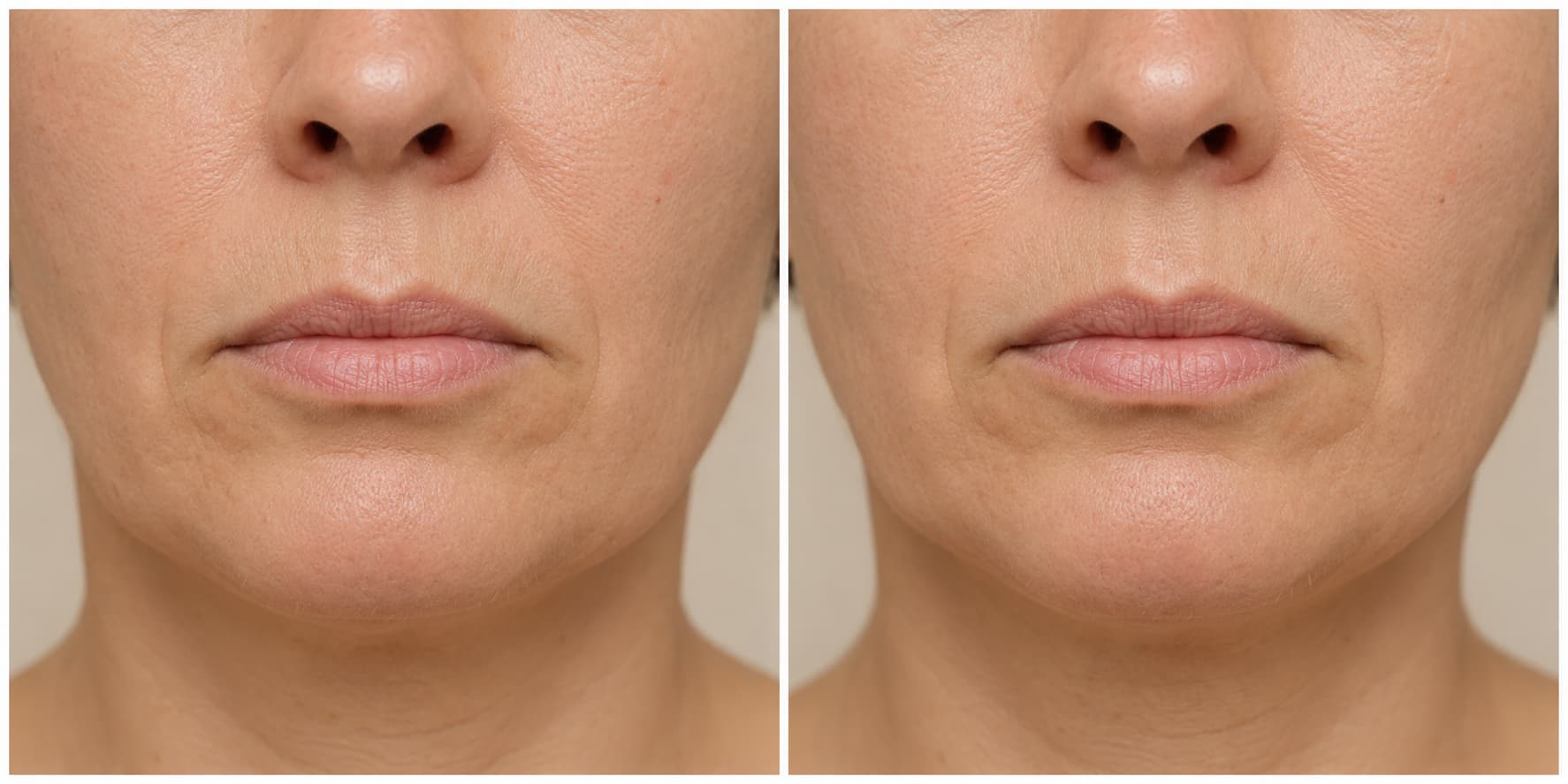
The oval is, alongside the eye contour, the area that drives the most requests. It's also the one where Kobido can support a perceptible difference — provided the work is sustained over time.
What Kobido can help with: a more defined oval, a less clenched jaw (in clients who grind their teeth at night or under concentration), a sharper transition between the cheek and the neck. Work on the jaw also releases tensions that "pull" the oval downwards — the impression is often one of a more open, more settled face, simply because it has relaxed.
In practice, I work the jaw through kneading the masseter muscle, precise pressures along the points that punctuate it, and deep smoothing along the line of the oval, from the chin up to the ear. This is one of the areas where manual work has the most direct effect — because we're acting directly on powerful and often contracted muscles.
What I observe When a client tells me "I'd like to work on the oval", I already know I'll spend much more time on the jaw and the base of the skull than on the oval itself. Most of the time, what feels like a "dropping oval" is actually a heavy jaw, trapezius muscles pulling downwards, or cervical tension travelling back up into the face. Working the oval starts with releasing what weighs around it. The result isn't a mechanical "lift" effect — it's a face that looks more open and more settled because it has let go.
Around the mouth and the "smoker's lines"
The area around the mouth is delicate, because it's very mobile and the vertical lines that can appear there (the "smoker's lines" or "barcode lines") come both from years of facial expression and from the skin quality of the zone itself.
What Kobido can help with: a less tight zone, corners of the mouth pulled down less strongly (which changes the overall expression of the face, which looks less closed), skin that feels slightly more toned. On set vertical lines, the effect is modest — as with the nasolabial folds, these are lines whose cause is largely structural.
The concrete work is gentle smoothing around the lips, pressures at the corners, and local drainage. For clients who want more visible change on this area specifically, I always note that a combined approach (Kobido for relaxation and skin quality, aesthetic medicine for the set vertical lines) often gives the best results.
Want to know how many sessions to plan for your area? The answer depends on the area and your goal. I've written a full article on this: how many Kobido sessions to plan, depending on your goals. You can also explore my treatments or book a session directly.
What about the neck and décolleté?
I prefer to be very clear about this: I don't work on the neck or the décolleté. These are areas that call for specific training and an approach I haven't developed in my Kobido practice — and I'd rather excel on the face than offer an imperfect treatment on areas I don't master enough.
That said, my work on the jaw and the base of the skull (occiput) often has a knock-on effect on neck tension, without me working the neck directly. It's a frequent side benefit, not the object of the session.
Whole-face effects: radiance, release, a lighter face
Beyond the zone-by-zone work, there's a category of effects almost all my clients describe, regardless of the area that brought them to the studio in the first place.
Radiance of the complexion is the most immediate effect. The stimulation of microcirculation throughout the massage usually revives a fresher tone and decongests grey or dull areas. Visible from the first session, it typically holds for two to five days after the treatment. If you'd like to understand the mechanisms behind this, I've gathered the evidence in my article on what science actually says about the benefits of facial massage.
Release isn't confined to the face: many clients also describe a wider sense of calm, slower breathing, sometimes a different quality of sleep on the night that follows. This isn't a side effect — it's a central part of the benefit.
The sense of a lighter face is a phrase my clients use often. The face feels more mobile, freer, less "held". This impression comes from drainage, muscular release, and the freeing of the fascia — the connective tissue that surrounds the muscles. It can last a few days after a single session, and longer after a course.
What Kobido cannot do, zone by zone
I close with this summary because it matters. Approaching a treatment with unrealistic expectations is the surest way to set up a disappointment that erases all the real benefits.
Kobido doesn't erase a set frown line, doesn't fill a hollow under the eye, doesn't make crow's feet etched into the skin disappear, and doesn't act on pigmented dark circles. It works only modestly on nasolabial folds and the vertical lines around the mouth, whose cause is largely structural. On an oval that has been sagging for a long time, the result exists but stays measured; an aesthetic medicine protocol delivers more visible effects if that's what's being sought. And I remind you that I work on neither the neck nor the décolleté.
I hold to this honesty because it's what distinguishes, in my view, a well-mastered treatment from a sales argument. Kobido has a great deal to offer — provided you know precisely what you're asking of it.
Let's talk about your face together If you want to know precisely what Kobido can support on the areas that concern you, the most accurate answer comes from a short conversation before a first appointment. A few minutes by phone, message or email is enough for me to guide you with real precision. Book a session → | See all my treatments →
Frequently asked questions about the effects of Kobido
From the first session, most clients notice a brighter complexion, a more rested face, less drawn features and a lasting sense of release. Zone by zone, the forehead and eye contour usually respond first; the oval and skin quality need several sessions for a perceptible difference.
Yes, the oval is one of the areas where manual work has the most direct effect — provided the work is sustained over time. Kobido works the jaw, the masseter and the line of the oval through upward smoothing and targeted pressures. The result isn't a mechanical "lift" effect but a face that looks more open and more settled because it has relaxed.
No, Kobido doesn't erase set wrinkles. It can soften their contracted quality, restore mobility to the area, and support a more relaxed face. For sharper smoothing of marked wrinkles (frown line, smoker's lines, nasolabial folds), this is typically a matter for aesthetic medicine.
It depends on the origin of the dark circles. On circulatory ones (puffiness, bluish shadows in the morning, fatigue), manual drainage can sometimes bring a visible difference from the first session. On pigmented dark circles (genetic or hyperpigmentation-driven) and structural hollows under the eye, Kobido will have little effect.
No, I don't work on the neck or the décolleté in my studio. I prefer to excel on the face rather than offer an imperfect treatment on areas that call for specific training. Work on the jaw and the base of the skull does, however, often have an indirect effect on neck tension.
For areas that respond quickly (forehead, eye contour, jawline), one to three sessions can be enough to perceive a real difference. For sustained work (oval, skin quality, nasolabial folds), a programme of 5 to 10 weekly sessions is usually more appropriate, followed by regular maintenance. The full detail is in my article on how many sessions to plan.
Other recent articles in the “Facial wellbeing” category

Kobido and sensitive skin: rosacea, reactivity, what to know

Cortisol face: how stress ages your skin — and what helps
